Asset Information Model Package
The MTConnect Standard supports a simple distributed storage mechanism that allows applications and equipment to share and exchange complex information models in a similar way to a distributed data store. The Asset Information Modelinformation model that provides semantic models for Assets. associates each MTConnectAssets entity with a unique identifier and allows for some predefined mechanisms to find, create, request, update, and delete these electronic documents in a way that provides for consistency across multiple pieces of equipment.
The protocol provides a limited mechanism of accessing Assetsasset that is used by the manufacturing process to perform tasks. > Note 1 to entry: An Asset relies upon an Device to provide observations and information about itself and the Device revises the information to reflect changes to the Asset during their interaction. Examples of Assets are cutting tools, Part Information, Manufacturing Processes, Fixtures, and Files. > Note 2 to entry: A singular Asset::assetId uniquely identifies an Asset throughout its lifecycle and is used to track and relate the Asset to other Devices and entities. > Note 3 to entry: Assets are temporally associated with a device and can be removed from the device without damage or alteration to its primary functions. using the following properties: Asset::assetId, assetitem, thing or entity that has potential or actual value to an organization. ISO 55000:2014 > Note 1 to entry: Value can be tangible or intangible, financial or non-financial, and includes consideration of risks and liabilities. It can be positive or negative at different stages of the asset life. > Note 2 to entry: Physical assets usually refer to equipment, inventory and properties owned by the organization. Physical assets are the opposite of intangible assets, which are non-physical assets such as leases, brands, digital assets, use rights, licences, intellectual property rights, reputation or agreements. > Note 3 to entry: A grouping of assets referred to as an asset system could also be considered as an asset. type (element name of assetitem, thing or entity that has potential or actual value to an organization. ISO 55000:2014 > Note 1 to entry: Value can be tangible or intangible, financial or non-financial, and includes consideration of risks and liabilities. It can be positive or negative at different stages of the asset life. > Note 2 to entry: Physical assets usually refer to equipment, inventory and properties owned by the organization. Physical assets are the opposite of intangible assets, which are non-physical assets such as leases, brands, digital assets, use rights, licences, intellectual property rights, reputation or agreements. > Note 3 to entry: A grouping of assets referred to as an asset system could also be considered as an asset. root), and the piece of equipment associated with the assetitem, thing or entity that has potential or actual value to an organization. ISO 55000:2014 > Note 1 to entry: Value can be tangible or intangible, financial or non-financial, and includes consideration of risks and liabilities. It can be positive or negative at different stages of the asset life. > Note 2 to entry: Physical assets usually refer to equipment, inventory and properties owned by the organization. Physical assets are the opposite of intangible assets, which are non-physical assets such as leases, brands, digital assets, use rights, licences, intellectual property rights, reputation or agreements. > Note 3 to entry: A grouping of assets referred to as an asset system could also be considered as an asset. . These access strategies will provide the following services and answer the following questions: What assetsitem, thing or entity that has potential or actual value to an organization. ISO 55000:2014 > Note 1 to entry: Value can be tangible or intangible, financial or non-financial, and includes consideration of risks and liabilities. It can be positive or negative at different stages of the asset life. > Note 2 to entry: Physical assets usually refer to equipment, inventory and properties owned by the organization. Physical assets are the opposite of intangible assets, which are non-physical assets such as leases, brands, digital assets, use rights, licences, intellectual property rights, reputation or agreements. > Note 3 to entry: A grouping of assets referred to as an asset system could also be considered as an asset. are from a particular piece of equipment? What are the assetsitem, thing or entity that has potential or actual value to an organization. ISO 55000:2014 > Note 1 to entry: Value can be tangible or intangible, financial or non-financial, and includes consideration of risks and liabilities. It can be positive or negative at different stages of the asset life. > Note 2 to entry: Physical assets usually refer to equipment, inventory and properties owned by the organization. Physical assets are the opposite of intangible assets, which are non-physical assets such as leases, brands, digital assets, use rights, licences, intellectual property rights, reputation or agreements. > Note 3 to entry: A grouping of assets referred to as an asset system could also be considered as an asset. of a particular type? What assetitem, thing or entity that has potential or actual value to an organization. ISO 55000:2014 > Note 1 to entry: Value can be tangible or intangible, financial or non-financial, and includes consideration of risks and liabilities. It can be positive or negative at different stages of the asset life. > Note 2 to entry: Physical assets usually refer to equipment, inventory and properties owned by the organization. Physical assets are the opposite of intangible assets, which are non-physical assets such as leases, brands, digital assets, use rights, licences, intellectual property rights, reputation or agreements. > Note 3 to entry: A grouping of assets referred to as an asset system could also be considered as an asset. is stored for a given Asset::assetId?
Although these mechanisms are provided, an agentsoftware that collects data published from one or more piece(s) of equipment, organizes that data in a structured manner, and responds to requests for data from client software systems by providing a structured response in the form of a response document that is constructed using the semantic data model of a Standard. should not be considered a data store or a system of reference. The agentsoftware that collects data published from one or more piece(s) of equipment, organizes that data in a structured manner, and responds to requests for data from client software systems by providing a structured response in the form of a response document that is constructed using the semantic data model of a Standard. is providing an ephemeral storage capability that will temporarily manage the data for applications wishing to communicate and manage data as needed by the various processes. An application cannot rely on an agentsoftware that collects data published from one or more piece(s) of equipment, organizes that data in a structured manner, and responds to requests for data from client software systems by providing a structured response in the form of a response document that is constructed using the semantic data model of a Standard. for long term persistence or durability since the agentsoftware that collects data published from one or more piece(s) of equipment, organizes that data in a structured manner, and responds to requests for data from client software systems by providing a structured response in the form of a response document that is constructed using the semantic data model of a Standard. is only required to temporarily store the assetitem, thing or entity that has potential or actual value to an organization. ISO 55000:2014 > Note 1 to entry: Value can be tangible or intangible, financial or non-financial, and includes consideration of risks and liabilities. It can be positive or negative at different stages of the asset life. > Note 2 to entry: Physical assets usually refer to equipment, inventory and properties owned by the organization. Physical assets are the opposite of intangible assets, which are non-physical assets such as leases, brands, digital assets, use rights, licences, intellectual property rights, reputation or agreements. > Note 3 to entry: A grouping of assets referred to as an asset system could also be considered as an asset. data and may require another system to provide the source data upon initialization. An agentsoftware that collects data published from one or more piece(s) of equipment, organizes that data in a structured manner, and responds to requests for data from client software systems by providing a structured response in the form of a response document that is constructed using the semantic data model of a Standard. is always providing the best-known equipment centric view of the data given the limitations of that piece of equipment.
The MTConnect Standard has two data item types to support change notification when an Assetasset that is used by the manufacturing process to perform tasks. > Note 1 to entry: An Asset relies upon an Device to provide observations and information about itself and the Device revises the information to reflect changes to the Asset during their interaction. Examples of Assets are cutting tools, Part Information, Manufacturing Processes, Fixtures, and Files. > Note 2 to entry: A singular Asset::assetId uniquely identifies an Asset throughout its lifecycle and is used to track and relate the Asset to other Devices and entities. > Note 3 to entry: Assets are temporally associated with a device and can be removed from the device without damage or alteration to its primary functions. is added, updated or removed. AssetChanged states the Asset::assetId of the Assetasset that is used by the manufacturing process to perform tasks. > Note 1 to entry: An Asset relies upon an Device to provide observations and information about itself and the Device revises the information to reflect changes to the Asset during their interaction. Examples of Assets are cutting tools, Part Information, Manufacturing Processes, Fixtures, and Files. > Note 2 to entry: A singular Asset::assetId uniquely identifies an Asset throughout its lifecycle and is used to track and relate the Asset to other Devices and entities. > Note 3 to entry: Assets are temporally associated with a device and can be removed from the device without damage or alteration to its primary functions. that has been added or updated. AssetRemoved states the Asset::assetId of the Assetasset that is used by the manufacturing process to perform tasks. > Note 1 to entry: An Asset relies upon an Device to provide observations and information about itself and the Device revises the information to reflect changes to the Asset during their interaction. Examples of Assets are cutting tools, Part Information, Manufacturing Processes, Fixtures, and Files. > Note 2 to entry: A singular Asset::assetId uniquely identifies an Asset throughout its lifecycle and is used to track and relate the Asset to other Devices and entities. > Note 3 to entry: Assets are temporally associated with a device and can be removed from the device without damage or alteration to its primary functions. that has been removed. See Observation Information Model for more details.
Assets Appendix
XML Schema Diagrams
See XML schemas for the MTConnect standard here: //schemas.mtconnect.org/.
Assets Schema Diagrams
See Asset element in MTConnectAssets schema.
See Description element in MTConnectAssets schema.
CuttingTool Schema Diagrams
See CuttingTool element in MTConnectAssets schema.
See CuttingToolDefinition element in MTConnectAssets schema.
See CuttingToolArchetypeReference element in MTConnectAssets schema.
CuttingToolLifeCycle Schema Diagrams
See CuttingToolLifeCycle element in MTConnectAssets schema.
See CutterStatus element in MTConnectAssets schema.
See Location element in MTConnectAssets schema.
See Measurement element in MTConnectAssets schema.
See ProcessFeedRate element in MTConnectAssets schema.
See ProcessSpindleSpeed element in MTConnectAssets schema.
See ReconditionCount element in MTConnectAssets schema.
See ToolLife element in MTConnectAssets schema.
CuttingItem Schema Diagrams
See CuttingItems element in MTConnectAssets schema.
See CuttingItem element in MTConnectAssets schema.
See ItemLife element in MTConnectAssets schema.
ISO 13399 Diagrams
Measurement Diagrams
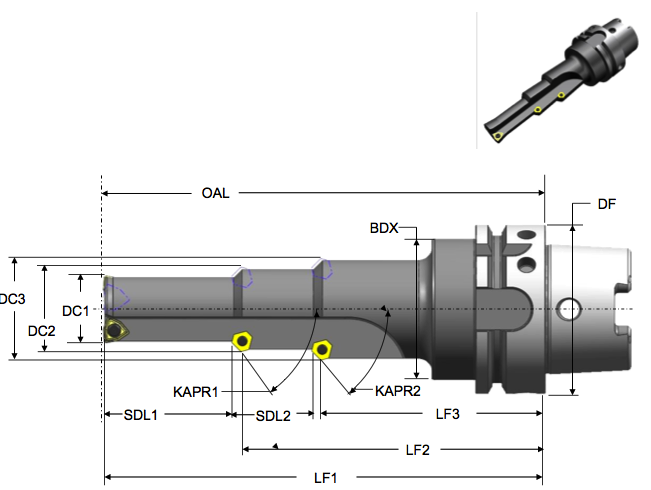
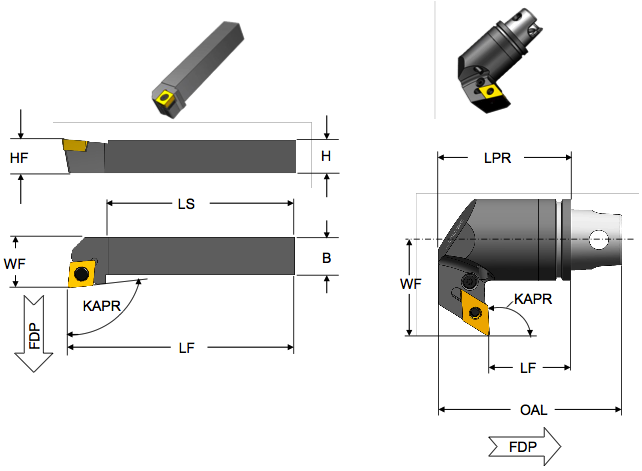
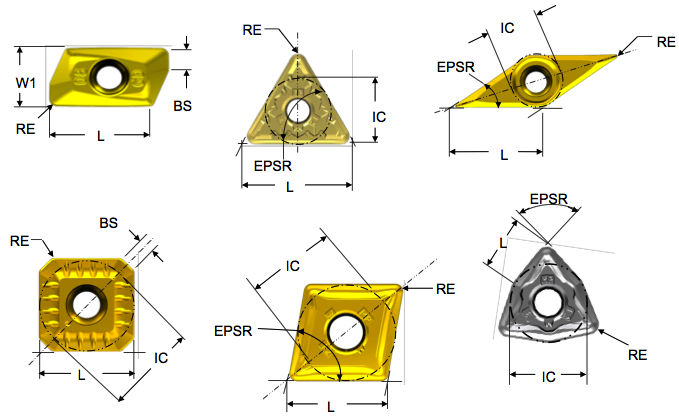
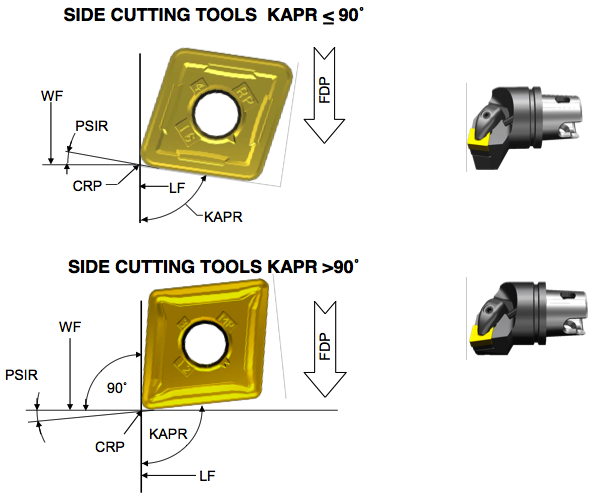
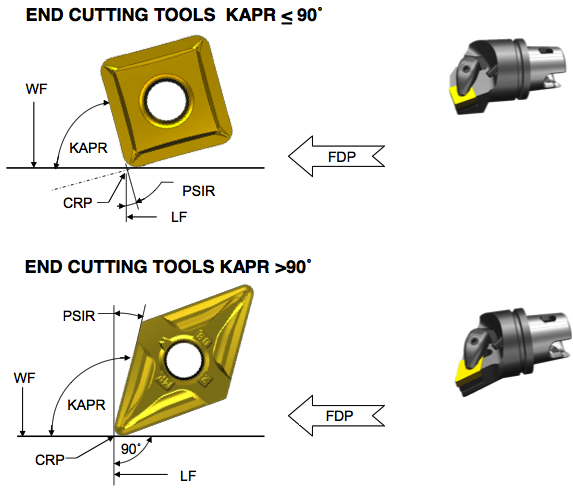
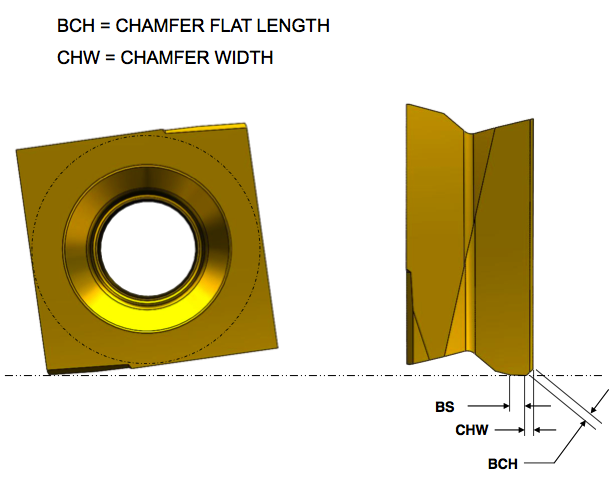
Cutting Tool Examples
Shell Mill
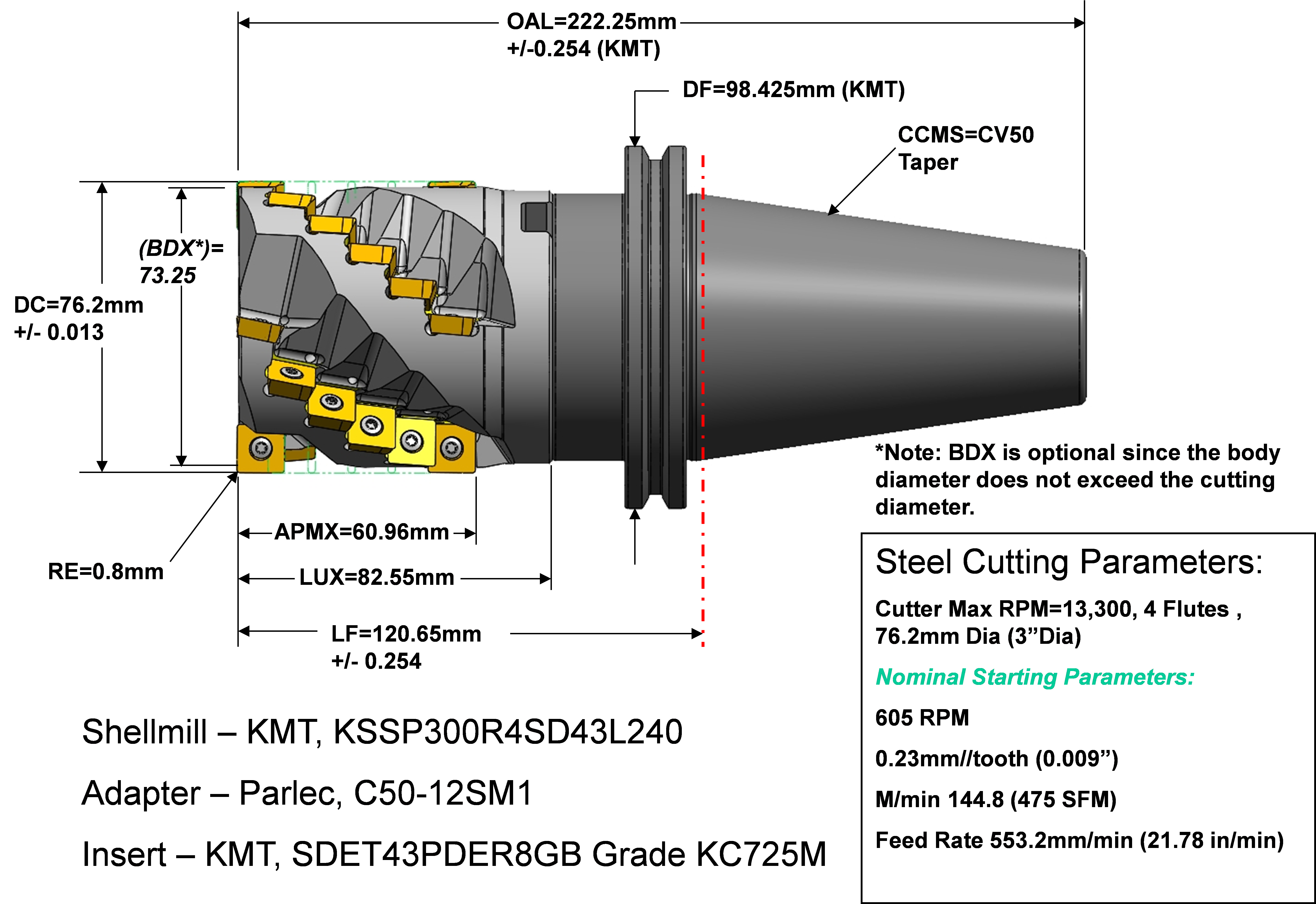
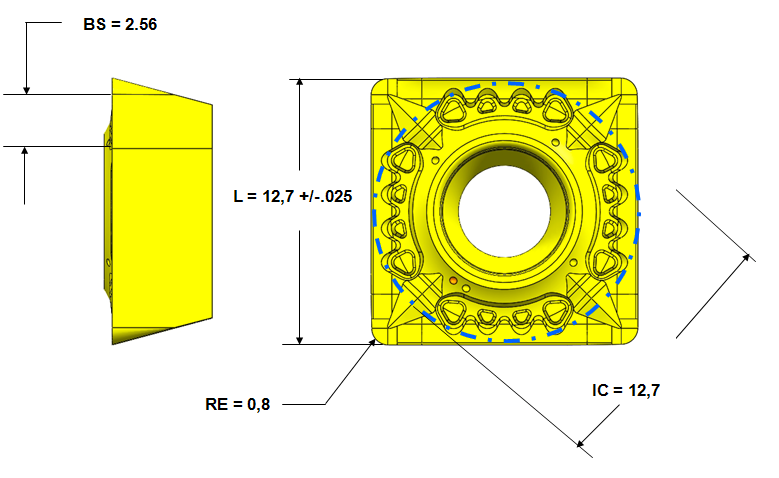
<?xml version="1.0" encoding="UTF-8"?>
<MTConnectAssets
xmlns:m="urn:mtconnect.org:MTConnectAssets:1.2"
xmlns="urn:mtconnect.org:MTConnectAssets:1.2"
xmlns:xsi="http://www.w3.org/2001/XMLSchema-instance"
xsi:schemaLocation="urn:mtconnect.org:MTConnectAssets:1.2
http://mtconnect.org/schemas/MTConnectAssets\_1.2.xsd">
  <Header creationTime="2011-05-11T13:55:22"
  assetBufferSize="1024" sender="localhost"
  assetCount="2" version="1.2" instanceId="1234"/>
  <Assets>
  <CuttingTool serialNumber="1" toolId="KSSP300R4SD43L240"
  timestamp="2011-05-11T13:55:22" assetId="KSSP300R4SD43L240.1"
  manufacturers="KMT,Parlec">
    <CuttingToolLifeCycle>
    <CutterStatus><Status>NEW</Status></CutterStatus>
    <ProcessSpindleSpeed maximum="13300"
    nominal="605">10000</ProcessSpindleSpeed>
    <ProcessFeedRate
    nominal="9.22">9.22</ProcessSpindleSpeed>
    <ConnectionCodeMachineSide>CV50
    </ConnectionCodeMachineSide>
    <Measurements>
      <BodyDiameterMax code="BDX">73.25
      </BodyDiameterMax>
      <OverallToolLength nominal="222.25"
        minimum="221.996" maximum="222.504"
        code="OAL">222.25</OverallToolLength>
      <UsableLengthMax code="LUX" nominal="82.55">82.55
      </UsableLengthMax>
      <CuttingDiameterMax code="DC" nominal="76.2"
        maximum="76.213" minimum="76.187">76.2
      </CuttingDiameterMax>
      <BodyLengthMax code="LF" nominal="120.65"
        maximum="120.904" minimum="120.404">120.65
      </BodyLengthMax>
      <DepthOfCutMax code="APMX"
      nominal="60.96">60.95</DepthOfCutMax>
      <FlangeDiameterMax code="DF"
        nominal="98.425">98.425</FlangeDiameterMax>
    </Measurements>
    <CuttingItems count="24">
      <CuttingItem indices="1-24" itemId="SDET43PDER8GB"
        manufacturers="KMT" grade="KC725M">
        <Measurements>
          <CuttingEdgeLength code="L" nominal="12.7"
            minimum="12.675" maximum="12.725">12.7
          </CuttingEdgeLength>
        <WiperEdgeLength code="BS" nominal=
          "2.56">2.56</WiperEdgeLength>
        <IncribedCircleDiameter code="IC"
          nominal="12.7">12.7
        </IncribedCircleDiameter>
        <CornerRadius code="RE" nominal="0.8">
          0.8</CornerRadius>
      </Measurements>
      </CuttingItem>
    </CuttingItems>
    </CuttingToolLifeCycle>
    </CuttingTool>
  </Assets>
</MTConnectAssets>
Step Drill
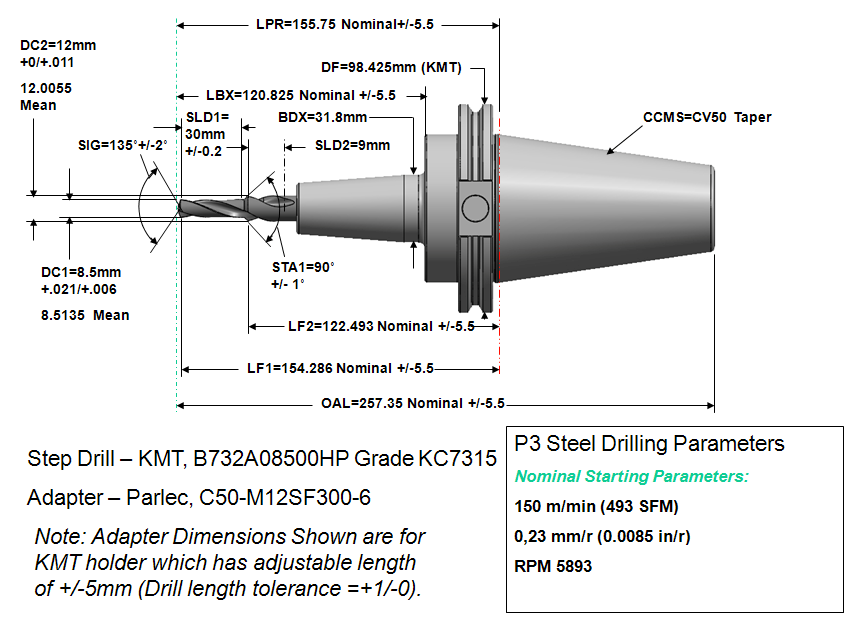
<?xml version="1.0" encoding="UTF-8"?>
<MTConnectAssets xmlns:m="urn:mtconnect.org:MTConnectAssets:1.2"
xmlns="urn:mtconnect.org:MTConnectAssets:1.2"
xmlns:xsi="http://www.w3.org/2001/XMLSchema-instance"
xsi:schemaLocation="urn:mtconnect.org:MTConnectAssets:1.2
http://mtconnect.org/schemas/MTConnectAssets\_1.2.xsd">
  <Header creationTime="2011-05-
  11T13:55:22" assetBufferSize="1024"
  sender="localhost" assetCount="2" version="1.2" instanceId="1234"/>
  <Assets>
    <CuttingTool serialNumber="1 " toolId="B732A08500HP"
    timestamp="2011-05-11T13:55:22" assetId="B732A08500HP "
    manufacturers="KMT,Parlec">
      <Description>
        Step Drill - KMT, B732A08500HP Grade KC7315
        Adapter - Parlec, C50-M12SF300-6
      </Description>
      <CuttingToolLifeCycle>
        <CutterStatus><Status>NEW</Status></CutterStatus>
        <ProcessSpindleSpeed nominal="5893">5893</ProcessSpindleSpeed>
        <ProcessFeedRate nominal="2.5">2.5</ProcessFeedRate>
        <ConnectionCodeMachineSide>CV50 Taper</ConnectionCodeMachineSide>
        <Measurements>
          <BodyDiameterMax code="BDX">31.8</BodyDiameterMax>
          <BodyLengthMax code="LBX" nominal="120.825" maximum="126.325"
          minimum="115.325">120.825</BodyLengthMax>
          <ProtrudingLength code="LPR" nominal="155.75" maximum="161.25"
          minimum="150.26">155.75</ProtrudingLength>
          <FlangeDiameterMax code="DF"
          nominal="98.425">98.425</FlangeDiameterMax>
          <OverallToolLength nominal="257.35" minimum="251.85"
          maximum="262.85" code="OAL">257.35</OverallToolLength>
        </Measurements>
        <CuttingItems count="2">
          <CuttingItem indices="1" manufacturers="KMT" grade="KC7315">>
            <Measurements>
              <CuttingDiameter code="DC1" nominal="8.5" maximum="8.521"
              minimum="8.506">8.5135</CuttingDiameter>
              <StepIncludedAngle code="STA1" nominal="90" maximum="91"
              minimum="89">90</StepIncludedAngle>
              <FunctionalLength code="LF1" nominal="154.286"
              minimum="148.786"
              maximum="159.786">154.286</FunctionalLength>
              <StepDiameterLength code="SDL1"
              nominal="9">9</StepDiameterLength>
              <PointAngle code="SIG" nominal="135" minimum="133"
              maximum="137">135</PointAngle>
            </Measurements>
          </CuttingItem>
          <CuttingItem indices="2" manufacturers="KMT" grade="KC7315">>
            <Measurements>
              <CuttingDiameter code="DC2" nominal="12" maximum="12.011"
              minimum="12">12</CuttingDiameter>
              <FunctionalLength code="LF2" nominal="122.493"
              maximum="127.993"
              minimum="116.993">122.493</FunctionalLength>
              <StepDiameterLength code="SDL2"
              nominal="9">9</StepDiameterLength>
            </Measurements>
          </CuttingItem>
        </CuttingItems>
      </CuttingToolLifeCycle>
    </CuttingTool>
  </Assets>
</MTConnectAssets>
Shell Mill with Individual Loci
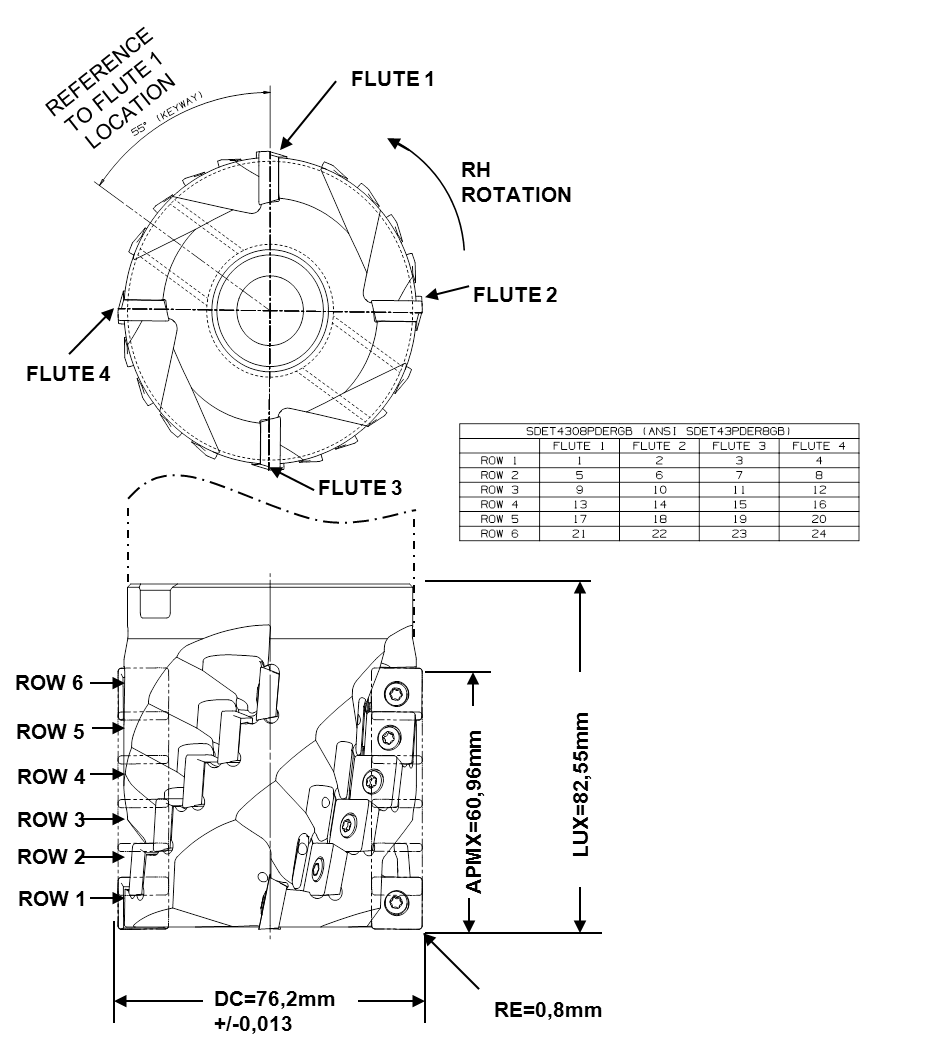
<?xml version="1.0" encoding="UTF-8"?>
<MTConnectAssets xmlns:m="urn:mtconnect.org:MTConnectAssets:1.2"
xmlns="urn:mtconnect.org:MTConnectAssets:1.2"
xmlns:xsi="http://www.w3.org/2001/XMLSchema-instance"
xsi:schemaLocation="urn:mtconnect.org:MTConnectAssets:1.2
http://mtconnect.org/schemas/MTConnectAssets\_1.2.xsd">
  <Header creationTime="2011-05-11T13:55:22" assetBufferSize="1024"
  sender="localhost" assetCount="2" version="1.2" instanceId="1234"/>
  <Assets>
    <CuttingTool serialNumber="1" toolId="KSSP300R4SD43L240"
    timestamp="2011-05-11T13:55:22" assetId="KSSP300R4SD43L240.1"
    manufacturers="KMT,Parlec">
      <Description>Keyway: 55 degrees</Description>
      <CuttingToolLifeCycle>
        <CutterStatus><Status>NEW</Status></CutterStatus>
        <Measurements>
          <UsableLengthMax code="LUX"
          nominal="82.55">82.55</UsableLengthMax>
          <CuttingDiameterMax code="DC" nominal="76.2" maximum="76.213"
          minimum="76.187">76.2</CuttingDiameterMax>
          <DepthOfCutMax code="APMX" nominal="60.96">60.95</DepthOfCutMax>
        </Measurements>
        <CuttingItems count="24">
          <CuttingItem indices="1" itemId="SDET43PDER8GB"
          manufacturers="KMT">
            <Locus>FLUTE: 1, ROW: 1</Locus>
            <Measurements>
             <DriveAngle code="DRVA" nominal="55">55</DriveAngle>
           </Measurements>
          </CuttingItem>
          <CuttingItem indices="2-24" itemId="SDET43PDER8GB"
          manufacturers="KMT">
            <Locus>FLUTE: 2-4, ROW: 1; FLUTE: 1-4, ROW 2-6</Locus>
          </CuttingItem>
        </CuttingItems>
      </CuttingToolLifeCycle>
    </CuttingTool>
  </Assets>
</MTConnectAssets>
Drill with Individual Loci
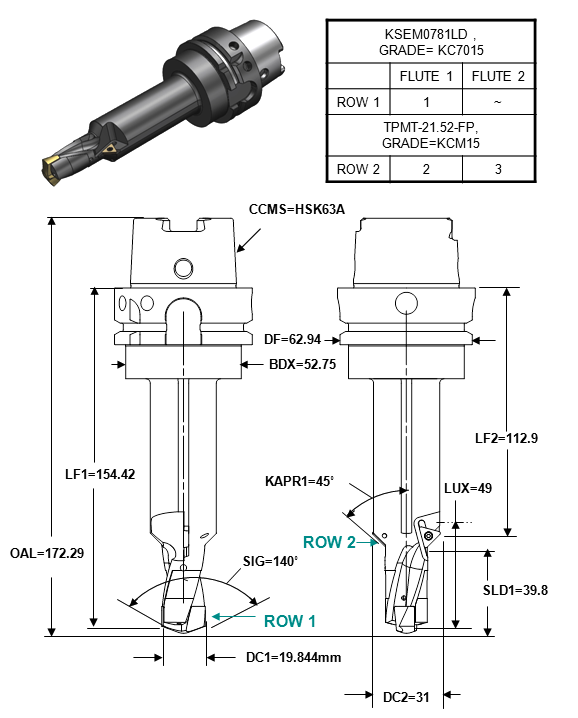
<?xml version="1.0" encoding="UTF-8"?>
<MTConnectAssets xmlns:m="urn:mtconnect.org:MTConnectAssets:1.2"
xmlns="urn:mtconnect.org:MTConnectAssets:1.2"
xmlns:xsi="http://www.w3.org/2001/XMLSchema-instance"
xsi:schemaLocation="urn:mtconnect.org:MTConnectAssets:1.2
http://mtconnect.org/schemas/MTConnectAssets\_1.2.xsd">
  <Header creationTime="2011-05-11T13:55:22" assetBufferSize="1024"
  sender="localhost" assetCount="2" version="1.2" instanceId="1234"/>
  <Assets>
    <CuttingTool serialNumber="1" toolId="KSEM0781LD"
    timestamp="2011-05-11T13:55:22" assetId="KSEM0781LD.1" manufacturers="KMT">
      <CuttingToolLifeCycle>
        <CutterStatus><Status>NEW</Status></CutterStatus>
        <ConnectionCodeMachineSide>HSK63A</ConnectionCodeMachineSide>
        <Measurements>
          <BodyDiameterMax code="BDX">52.75</BodyDiameterMax>
          <OverallToolLength nominal="172.29"
          code="OAL">172.29</OverallToolLength>
          <UsableLengthMax code="LUX" nominal="49">49</UsableLengthMax>
          <FlangeDiameterMax code="DF"
          nominal="62.94">62.94</FlangeDiameterMax>
        </Measurements>
        <CuttingItems count="3">
          <CuttingItem indices="1" itemId="KSEM0781LD" manufacturers="KMT"
          grade="KC7015">
            <Locus>FLUTE: 1, ROW: 1</Locus>
            <Measurements>
         <FunctionalLength code="LF1" nominal="154.42">154.42</FunctionalLength>
         <CuttingDiameter code="DC1" nominal="19.844">19.844</CuttingDiameter>
         <PointAngle code="SIG" nominal="140">140</PointAngle>
         <ToolCuttingEdgeAngle code="KAPR1" nominal="45">45</ToolCuttingEdgeAngle>
         <StepDiameterLength code="SLD1" nominal="39.8">39.8</StepDiameterLength>
            </Measurements>
          </CuttingItem>
          <CuttingItem indices="2-3" itemId="TPMT-21.52-FP"
          manufacturers="KMT" grade="KCM15">
            <Locus>FLUTE: 1-2, ROW: 2</Locus>
            <Measurements>
         <FunctionalLength code="LF2" nominal="112.9">119.2</FunctionalLength>
         <CuttingDiameter code="DC2" nominal="31">31</CuttingDiameter>
            </Measurements>
          </CuttingItem>
        </CuttingItems>
      </CuttingToolLifeCycle>
    </CuttingTool>
  </Assets>
</MTConnectAssets>
Shell Mill with Different Inserts on First Row
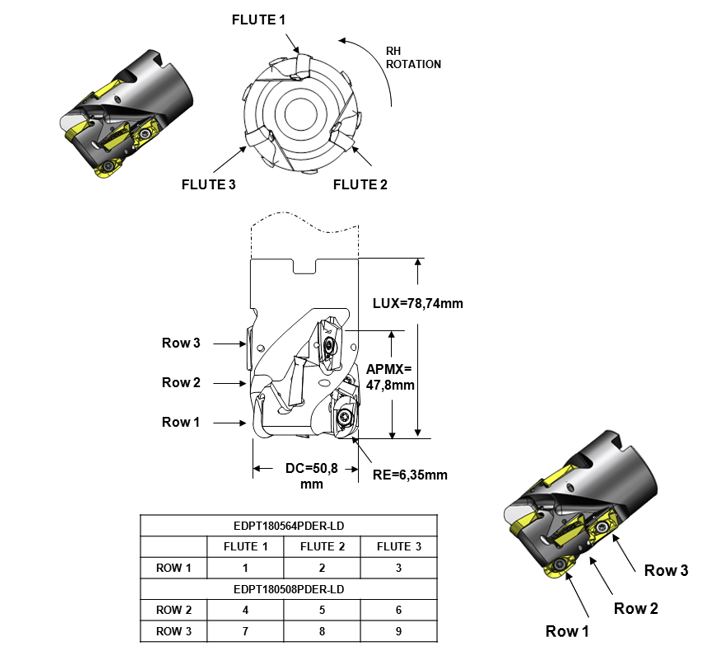
<?xml version="1.0" encoding="UTF-8"?>
<MTConnectAssets xmlns:m="urn:mtconnect.org:MTConnectAssets:1.2"
xmlns="urn:mtconnect.org:MTConnectAssets:1.2"
xmlns:xsi="http://www.w3.org/2001/XMLSchema-instance"
xsi:schemaLocation="urn:mtconnect.org:MTConnectAssets:1.2
http://mtconnect.org/schemas/MTConnectAssets\_1.2.xsd">
  <Header creationTime="2011-05-11T13:55:22" assetBufferSize="1024"
  sender="localhost" assetCount="2" version="1.2" instanceId="1234"/>
  <Assets>
    <CuttingTool serialNumber="1" toolId="XXX" timestamp="2011-05-11T13:55:22"
    assetId="XXX.1" manufacturers="KMT">
      <CuttingToolLifeCycle>
        <CutterStatus><Status>NEW</Status></CutterStatus>
        <Measurements>
          <DepthOfCutMax code="APMX" nominal="47.8">47.8</DepthOfCutMax>
          <CuttingDiameterMax code="DC"
          nominal="50.8">50.8</CuttingDiameterMax>
          <UsableLengthMax code="LUX"
          nominal="78.74">78.74</UsableLengthMax>
        </Measurements>
        <CuttingItems count="9">
          <CuttingItem indices="1-3" itemId="EDPT180564PDER-LD"
          manufacturers="KMT">
            <Locus>FLUTE: 1-3, ROW: 1</Locus>
            <Measurements>
              <CornerRadius code="RE" nominal="6.25">6.35</CornerRadius>
            </Measurements>
          </CuttingItem>
          <CuttingItem indices="4-9" itemId="EDPT180508PDER-LD"
          manufacturers="KMT">
            <Locus>FLANGE: 1-4, ROW: 2-3</Locus>
          </CuttingItem>
        </CuttingItems>
      </CuttingToolLifeCycle>
    </CuttingTool>
  </Assets>
</MTConnectAssets>
File Schema Diagrams
See File element in MTConnectAssets schema.
RawMaterial Schema Diagrams
See RawMaterial element in MTConnectAssets schema.
QIFDocumentWrapper Schema Diagrams
See QIFDocumentWrapper element in MTConnectAssets schema.